

Portugal toll roads are one of the few details that can catch travellers out after an otherwise easy flight, a smooth car collection and a beautiful first drive. The challenge is not that driving in Portugal is difficult. It is that some motorways have traditional toll booths, while others use electronic tolling only. A little planning before leaving the airport keeps the journey relaxed.
For many visitors, a car is an excellent way to combine Lisbon, Sintra, Cascais, Fátima, Nazaré, Óbidos and Porto at their own pace. It also comes with choices: whether to pay for faster motorways, take scenic alternatives, or leave the driving to a private transfer or tour. The best option depends on your route, your group and how much holiday time you want to spend behind the wheel.
How Portugal toll roads work
Portuguese motorways are generally known as autoestradas and are marked with an A followed by a number, such as the A1 between Lisbon and Porto. Many are toll roads. On some routes, drivers take a ticket when entering and pay at a booth when leaving. These are straightforward: follow the lane signs, keep your ticket safe and pay by card or cash where accepted.
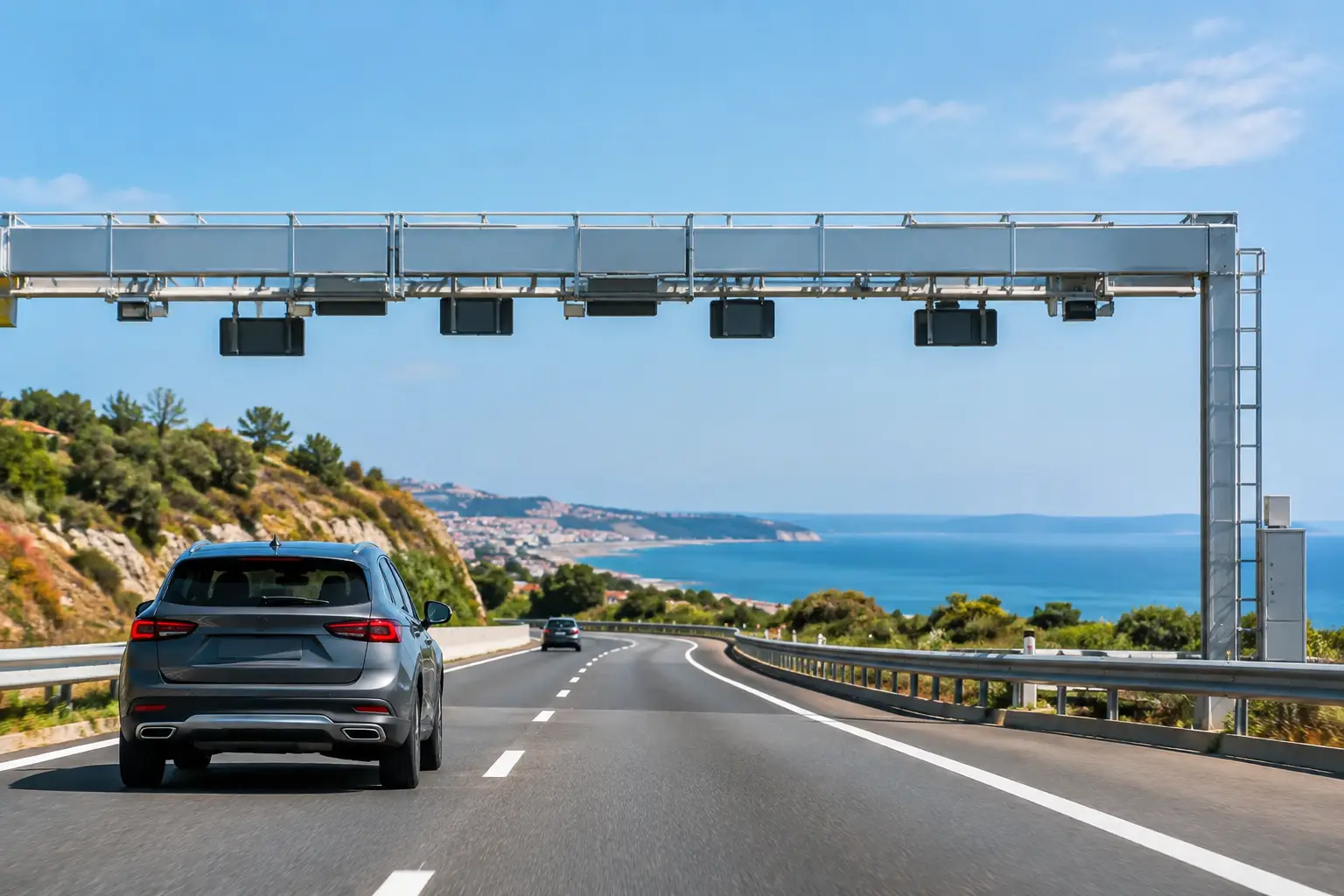
The less obvious system is electronic tolling. Certain roads have no payment booths at all. Instead, overhead gantries read the vehicle registration number or communicate with an approved electronic device. You may see signs referring to electronic tolls or electronic-only payment. Passing beneath the gantry does not mean the road is free.
This distinction matters most if you are driving a foreign-registered vehicle or a hire car. If there is no registered payment method attached to the car, the toll may be difficult to settle later and can lead to administrative charges. Do not assume that a motorway sign will direct you to a cash machine or a toll booth further ahead.
Traditional booths and electronic-only routes
Traditional toll roads are common on major routes and are usually easy to recognise. At the approach, lanes are clearly marked for cash, card and electronic tag users. Choose a staffed or card-payment lane if you are not using an electronic transponder. Avoid lanes reserved for Via Verde unless your vehicle has an authorised device linked to the correct account.
Electronic-only roads require more attention. They are particularly relevant in parts of the Algarve and on selected routes elsewhere in the country. Payment arrangements for foreign vehicles can include registering a bank card to the number plate, using a prepaid toll product, or hiring an approved electronic device. The available arrangements and collection points can change, so confirm the current process for your arrival airport and planned route before setting off.
If you cross into Portugal from Spain, look out for the first electronic toll payment signs after the border. This is often where visitors need to register their vehicle or select a payment option. Missing that point does not necessarily mean there is no way to pay, but resolving it later is far less convenient.
Hiring a car: the question to ask at collection
When collecting a hire car, ask one direct question before you leave the desk: “Is this car equipped for electronic tolls, and how will I be charged?” The answer should be clear, including the daily or rental-period fee for the device, the handling charge if applicable, and when tolls will be debited.
Many hire companies offer a transponder that records motorway charges automatically. For travellers using several motorways, this can be the simplest choice. You still pay for the tolls themselves, and there may be a device or administration fee, but you avoid having to register the number plate independently or calculate payment deadlines during your holiday.
It is worth checking whether the device is already fitted, whether it needs to be activated, and whether it covers electronic-only roads as well as conventional toll booths. Keep your rental agreement until all post-rental charges have appeared. A charge may arrive after you return home because the toll operator and hire company need time to process the journey.
Before departure, take a photograph of the car’s registration plate and any toll device in the windscreen. It is a small precaution that makes it easier to check a charge or speak with the hire company if something does not look right.
Are toll roads worth using?
Often, yes. Portugal’s toll motorways are generally well maintained and can save meaningful time between major destinations. The A1 is usually the efficient choice between Lisbon and Porto, while toll roads can make longer journeys towards the Algarve or the Spanish border more predictable. For families travelling with luggage, or for visitors fitting several destinations into a short stay, that time can be valuable.
But the fastest route is not always the best route. Avoiding tolls can lead you through towns, countryside and coastal stretches that are rewarding in their own right. It can also add considerably to journey times, especially on routes with frequent roundabouts, lower speed limits and local traffic. A navigation app may label an alternative as only slightly longer, yet the experience of driving it can be very different.
Consider the purpose of the day. If you have tickets, a restaurant reservation or a transfer to catch, use the motorway and treat the toll as part of the travel cost. If the day is intentionally unhurried, a non-toll route may suit you better. For day trips from Lisbon to Sintra and Cascais, traffic, parking restrictions and busy historic centres can matter more than motorway tolls.
Plan the route, not just the payment
Tolls are only one part of driving logistics in Portugal. Historic centres often have narrow streets, limited parking and access restrictions. In Sintra, for example, the road network can become congested during busy periods, and parking near the principal sights is limited. A car gives freedom, but it does not guarantee a quicker door-to-door experience.
The same applies to city stays. In Lisbon and Porto, a centrally located hotel may be easier to enjoy on foot, by taxi or with a private driver than with a hired car waiting in a car park. Collecting a car only for the days when you are leaving the city can reduce both stress and unnecessary rental costs.
Before each longer drive, check your navigation settings. If “avoid tolls” is selected by default, the route may be much slower than expected. If tolls are permitted, review the approximate travel time and have confidence that your payment arrangement is active before entering an electronic-only section.
A sensible departure check includes these four points:
- Confirm how electronic tolls will be paid for your specific vehicle.
- Save the hire company’s roadside assistance number and your booking reference.
- Check whether your route uses toll roads and allow for traffic near major cities.
- Keep a payment card and some euros available for conventional toll booths and parking.
When a private driver makes more sense
Driving can be a lovely part of a Portugal holiday, particularly for independent travellers exploring rural regions. Yet it is not essential for enjoying the country well. Couples, families and small groups often prefer to use transfers between cities and private day tours for destinations such as Sintra, Fátima, Nazaré and Óbidos.
With a local driver, there is no need to interpret toll systems, search for parking or nominate someone to remain sober at lunch. More importantly, the day can be shaped around your interests rather than around car collection times and road rules. You keep the flexibility to pause for a viewpoint, adjust the pace for children, or spend longer in a place that deserves it.
PortuCaleTravel arranges private tours and transfers with local support, so the practical details of transport can be handled alongside a route tailored to your plans. It is particularly helpful when you want to connect several destinations without turning travel days into a logistical task.
Portugal rewards travellers who leave room for detours, a long lunch and an unexpected viewpoint. Whether you choose the motorway or a private transfer, sort the transport details early, then let the road be part of the experience rather than the thing you worry about.