
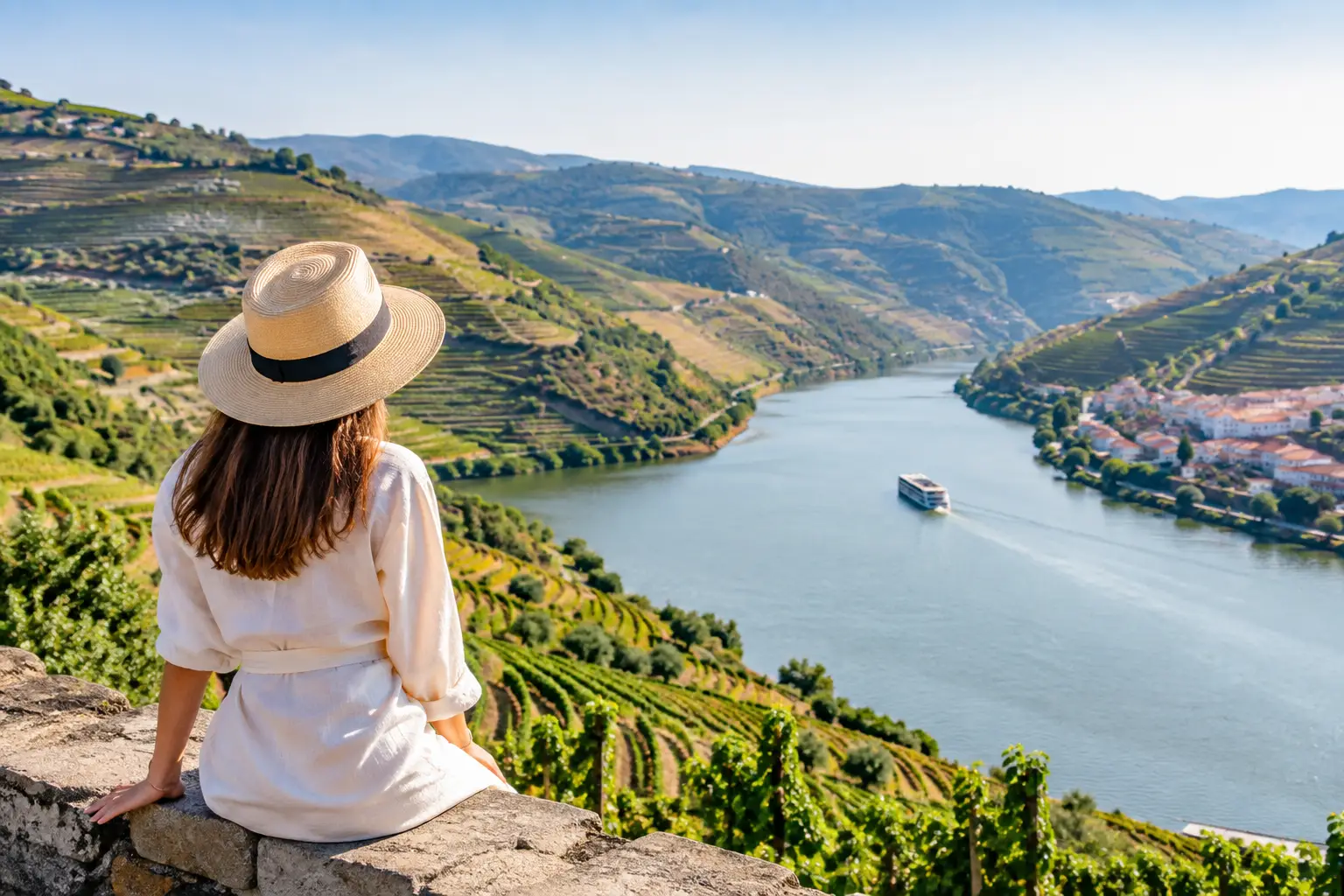
The Douro is not a destination to rush through. Its terraced vineyards, winding roads and riverside villages reward a slower rhythm, even when you only have one day. A well-planned Douro Valley day trip itinerary from Porto makes room for the views, a proper regional lunch and a wine experience, without turning the day into a race against the clock.
For many travellers, especially couples, families and small private groups, the key decision is not simply where to stop. It is how to enjoy the valley while avoiding the practical pressures of driving unfamiliar mountain roads, coordinating tastings and watching the time all afternoon.
Start early in Porto for a calmer day
Leave Porto between 8.00 and 8.30 am. The journey to the heart of the Douro Valley usually takes around 1 hour 45 minutes to 2 hours, depending on the route, traffic and your first stop. An early departure gives the day breathing space and avoids arriving at a winery just as the morning visit is ending.
The fastest route follows the A4 towards Vila Real before descending into the valley. It is efficient and comfortable, which matters if your priority is spending more time among the vineyards. The more scenic approach via the N222 offers memorable river views and a closer sense of the landscape, but it can add time due to bends and slower traffic.
There is no single right choice. A private tour can combine both: taking the direct route out of Porto, then returning by a more scenic road when the afternoon light softens across the river. This is often the best balance for a day trip.
Morning: begin with a viewpoint and a winery visit
Your first stop should set the tone. Rather than immediately moving into a tasting room, begin at a carefully chosen viewpoint overlooking the Douro River and its terraces. São Leonardo da Galafura is one of the best-known options, with broad views over the valley near Peso da Régua. On clear days, the scale of the landscape is striking: vineyard walls climbing the slopes, white estates in the distance and the river tracing its way below.
From there, continue to a local wine estate, known in Portugal as a quinta. A visit generally includes a walk through part of the property or an introduction to its history, followed by a tasting of Douro wines and, in some cases, Port. This distinction matters. The Douro produces excellent red, white and rosé wines as well as the fortified wine for which the region is internationally recognised.
Choose one high-quality winery visit rather than trying to fit in several. Two tastings before lunch can feel repetitive, and they leave less time to absorb the countryside. Families travelling with younger adults, or guests who do not drink, can still enjoy a winery experience for the setting, local food and story of the region. A personalised itinerary should account for that rather than treating every stop as compulsory.
Why advance reservations matter
Many estates welcome visitors only with a confirmed booking, particularly from spring through autumn and during harvest season. Appointment times are fixed, and late arrivals may shorten the experience. This is one reason a private driver-guide or organised private tour is especially helpful: the schedule, transport and confirmed visits are coordinated as one day rather than left to chance.
Lunch: make time for the Douro table
Lunch is more than a practical pause in the Douro. It is part of the experience. Aim to sit down between 12.30 and 1.30 pm, ideally at a winery restaurant or a well-regarded local restaurant close to Pinhão or Peso da Régua.
Expect generous, traditional cooking: roasted meats, cod dishes, river fish where available, seasonal vegetables and regional olive oil. A slower lunch with a river or vineyard view is worth protecting in the itinerary. Trying to eat quickly in order to add another attraction often makes the rest of the afternoon less enjoyable.
If you have dietary requirements, communicate them when arranging the day. Vegetarian, gluten-free and child-friendly options are increasingly available, but choice can be more limited in rural locations than in Porto. Advance notice gives the restaurant time to prepare properly.
Afternoon: Pinhão and the river
After lunch, make Pinhão your central afternoon stop. This small village sits in one of the Douro’s most photogenic stretches, surrounded by steep vineyard slopes and historic estates. Its railway station is worth a short visit for the blue-and-white tile panels depicting scenes of rural life and the wine harvest.
A one-hour boat trip from Pinhão is a peaceful way to see the valley from the water. It offers a different perspective from the road, with the vineyards rising directly from the riverbanks. For first-time visitors, it is often the moment when the geography of the Douro becomes clear.
However, a river cruise is not essential for everyone. If the weather is cool, the day is short, or your group would rather spend time at a second estate, it may be better to skip the boat. The strongest itineraries are shaped around what you enjoy, not around a checklist of attractions.
Add one final stop, not three
Before returning to Porto, choose one final experience: a second, more intimate tasting; a short scenic stop; or time for coffee in Pinhão. This is where flexibility matters most. In summer, you may prefer a later boat trip and a relaxed drink by the river. In winter, when daylight fades earlier, a final viewpoint may be the better choice.
Avoid planning several additional stops after 4.00 pm. The return journey is still substantial, and mountain roads demand concentration. A day that ends comfortably is far more memorable than one that ends in a rushed search for the motorway after dark.
A realistic Douro Valley day trip itinerary
A balanced full-day plan can look like this:
- 8.00 am: Departure from Porto.
- 10.00 am: Scenic viewpoint in the upper Douro.
- 10.45 am: Guided winery visit and tasting.
- 1.00 pm: Leisurely regional lunch.
- 3.00 pm: Pinhão, including the station and an optional river cruise.
- 4.30 pm: Final viewpoint, coffee stop or second estate visit.
- 5.00 to 5.30 pm: Return journey to Porto.
- 7.00 to 7.30 pm: Arrival back at your accommodation, depending on the route and traffic.
This is deliberately not overfilled. The Douro’s distances may look modest on a map, but roads are winding and each good stop deserves time. During harvest, generally from late August into September, conditions can be busier and timings may shift around estate operations.
Should you drive or choose a private tour?
Self-driving gives independence and can work well for confident drivers who are happy with narrow, twisting roads and who plan to limit alcohol tasting. It is most suitable if you want to stay overnight in the valley, when there is no pressure to return to Porto after a full day.
For a single-day visit, a private tour offers practical advantages. You can enjoy the tastings without worrying about driving, benefit from a route designed around opening times, and adapt the pace to your group. This is particularly valuable for families, travellers with limited mobility, or anyone who prefers not to manage unfamiliar roads after lunch.
PortuCaleTravel can arrange private Douro experiences with transport, a tailored route and local support from booking until the end of the service. The advantage is not simply having a driver. It is having the day organised around your priorities, whether that means vineyard scenery, food, Port wine, photography or a more relaxed pace.
Small details that improve the day
Wear comfortable shoes with grip, especially if you will walk among vineyards or visit viewpoints with uneven ground. Bring a light layer outside the hottest summer months, as the valley can feel cooler by the river and warmer on exposed terraces. In July and August, water, sun protection and an unhurried schedule are essential.
Most importantly, do not measure the day by the number of wineries visited. Leave room to look out of the window, pause over lunch and watch the river pass beneath the hills. That is where the Douro stays with you long after you return to Porto.